Ireland & the Wild Atlantic Way
Eight need-to-know facts about Ireland's Wild Atlantic Way
The Wild Atlantic Way is one of the longest defined coastal routes in the world, running the entire western seaboard of Ireland. Here are eight things worth knowing before you visit.
1. What is the Wild Atlantic Way?
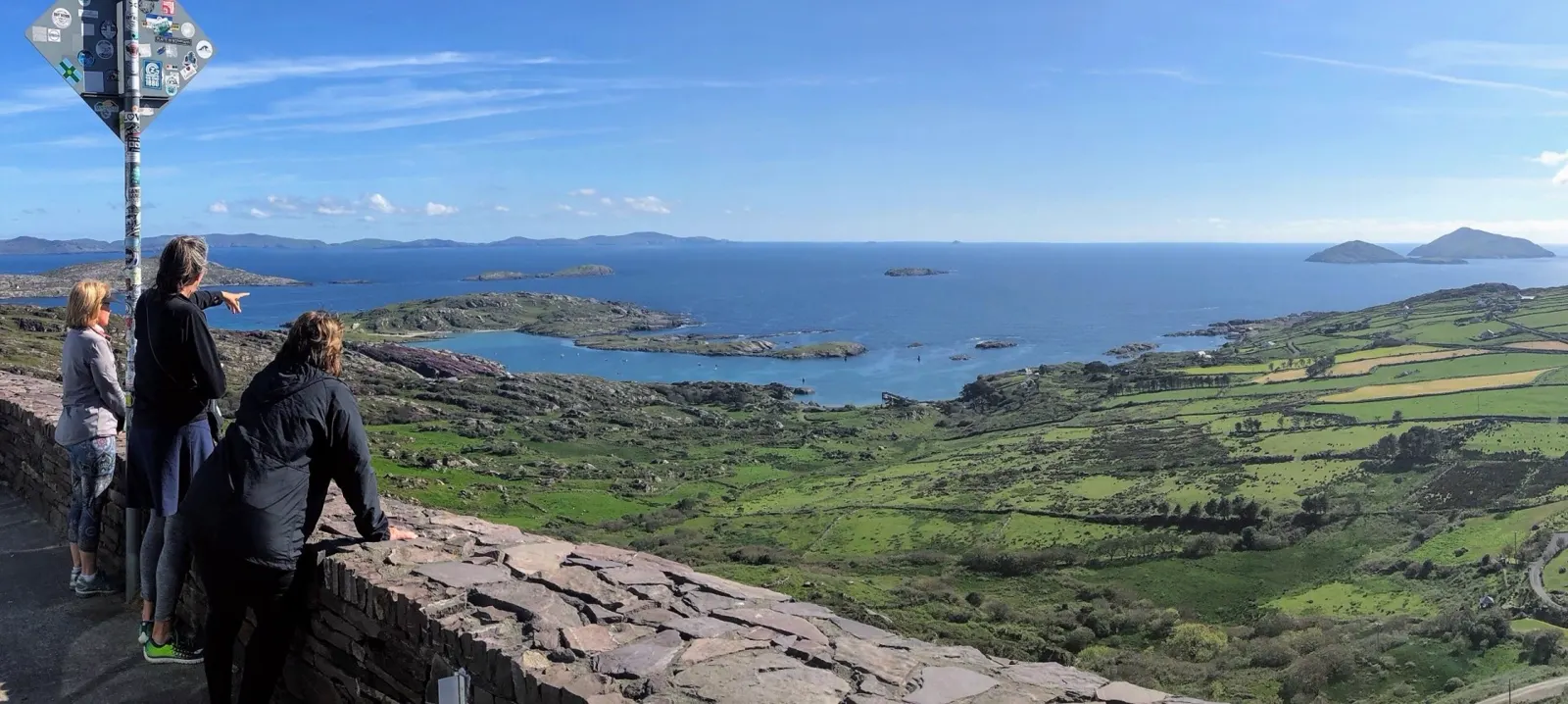
It is a signed coastal route covering the entire western seaboard of Ireland. It takes in the wild and dramatic landscapes of the west, and its people and culture are as varied as the route is long. Travel its winding roads and you notice the accents shift from one locality to the next, along with the musical traditions that have evolved over generations.
2. How long is it?
Around 2,600 kilometres, making it one of the world's longest defined coastal driving routes. For comparison, the island of Ireland measures less than 500 kilometres from its northern to southern tip. The extra distance comes from the deeply indented coastline — the peninsulas and headlands that push out into the Atlantic, particularly in Cork and Kerry.
3. Where does it start and end?
It begins in the historic town of Kinsale in County Cork and runs northwards, finishing in County Donegal. Each county along the way has its own character and landscape.
4. How many counties does it cross?
Nine: Donegal, Leitrim, Sligo, Mayo, Galway, Clare, Limerick, Kerry and Cork. Seven of those are among the ten largest counties in Ireland, so the route covers a substantial area.
5. Why is it famous?
Firstly for the landscape — the cliffs, beaches, mountains and constantly changing coastal light. Secondly for the people. The west of Ireland preserved a great deal of the country's culture and heritage through turbulent centuries, and it shows in everything from Aran knitwear and Donegal tweed to the dance and music traditions of north Kerry.
It has also become a favourite of film crews. Part of Star Wars was shot off the Kerry coast, and The Banshees of Inisherin was filmed on the Aran Islands and Achill Island.
6. Can you hike and bike it?
Yes. Although it is known as a driving route, the west has countless walking and hiking trails crossing coastal landscapes, cliffs, hills and villages. For cyclists there are purpose-built greenways, quiet coastal lanes suited to a leisurely spin, and — for the more committed — the full length of the route as a multi-day ride from Kinsale to Donegal.
7. What is the weather like?
Unpredictable. There are often long spells of fine weather, but always expect showers. The climate is mild and maritime: summers generally sit between 15°C and 20°C, and winters are milder than much of the rest of the country, usually around 5°C to 10°C. The constantly shifting skies are a large part of what makes the coast look the way it does. Bring a raincoat.
8. Do people speak Irish?
They do. Gaeilge is spoken in the Gaeltacht communities found along the route in Donegal, Mayo, Galway, Kerry and Cork, where it is used for everything from place names to ordinary conversation. English is understood everywhere. Irish belongs to the Celtic language family and its history here goes back thousands of years.
Worth the trip
The Wild Atlantic Way is best understood in person: walk its headlands, cycle its lanes, and talk to the people who live along it. Whether you are a hiker, a cyclist or simply someone who likes big landscapes, the west of Ireland delivers.