Explore Responsibly
Outdoor experiences should help people enjoy a place without taking away from what makes it worth visiting.
Beyond the Glass runs cycling, hiking, Mountain Skills and team activities in Cork and across Munster. The approach is simple: keep the experiences local, spend time outdoors, respect the places we pass through and make practical choices that reduce unnecessary impact where we can.
Exploring Cork without needing a car
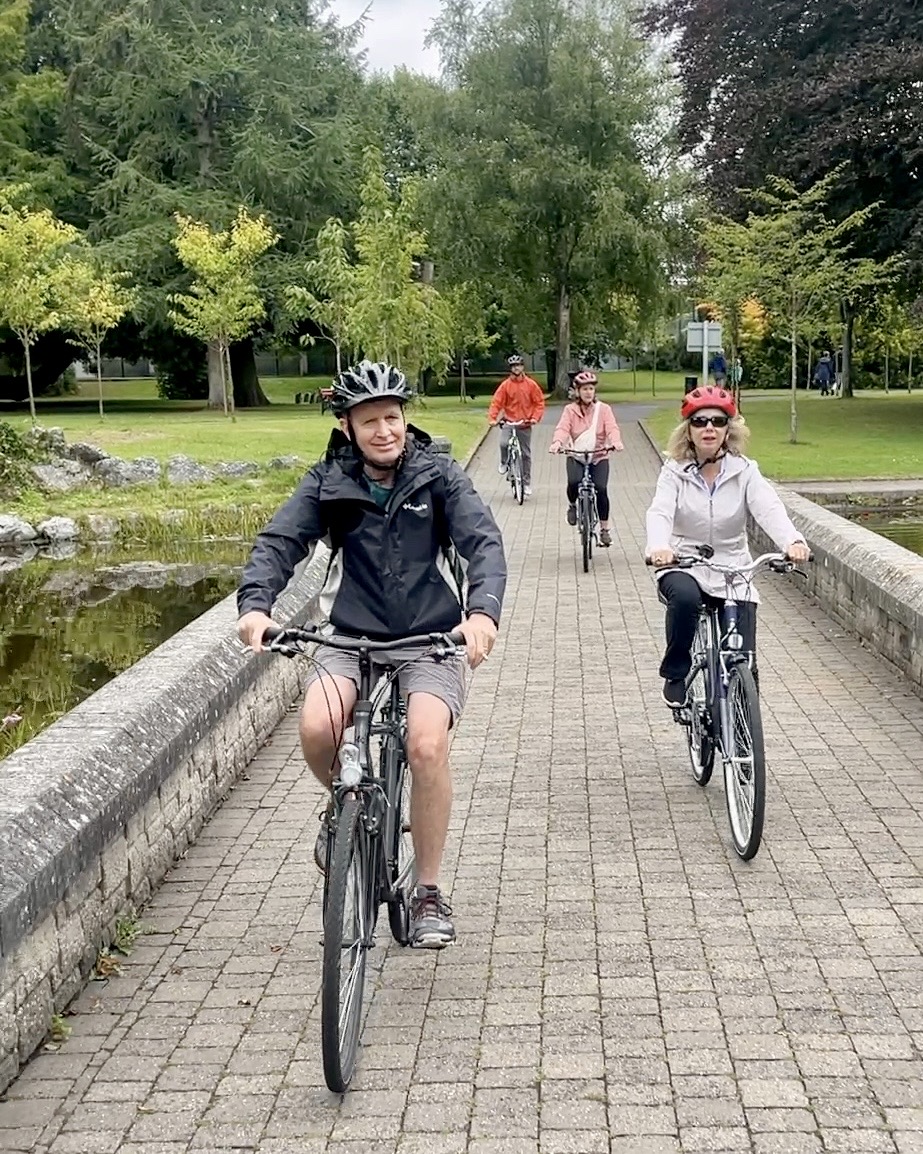
The Cork City Cycle Tour starts in Cork city centre and is easily reached from city-centre hotels, Cork bus station and Kent railway station. For visitors already staying in Cork, it is a simple way to explore more of the city without adding another car journey.
Cycling takes us along the River Lee, through parks and green spaces and towards Cork Harbour. The natural environment is part of the experience too — from the wildlife of the Lee to the wading birds feeding around the harbour at low tide, and people rowing and kayaking when conditions allow.
It is a chance to see how nature, recreation and everyday city life exist alongside one another.
A walking-based team activity
The Cork City Scavenger Hunt is based in the city centre, making it a practical option for Cork-based workplaces and groups already staying or meeting nearby. Once the activity begins, teams explore Cork on foot rather than being moved between locations by vehicle.
The clues encourage people to notice streets, public spaces, local details and parts of Cork they might otherwise pass by. The start and finish can also be planned around the group's wider day, helping people spend more time in the city centre and making it easy to combine the activity with local cafés, restaurants, pubs or other venues.
Spending time in the mountains responsibly
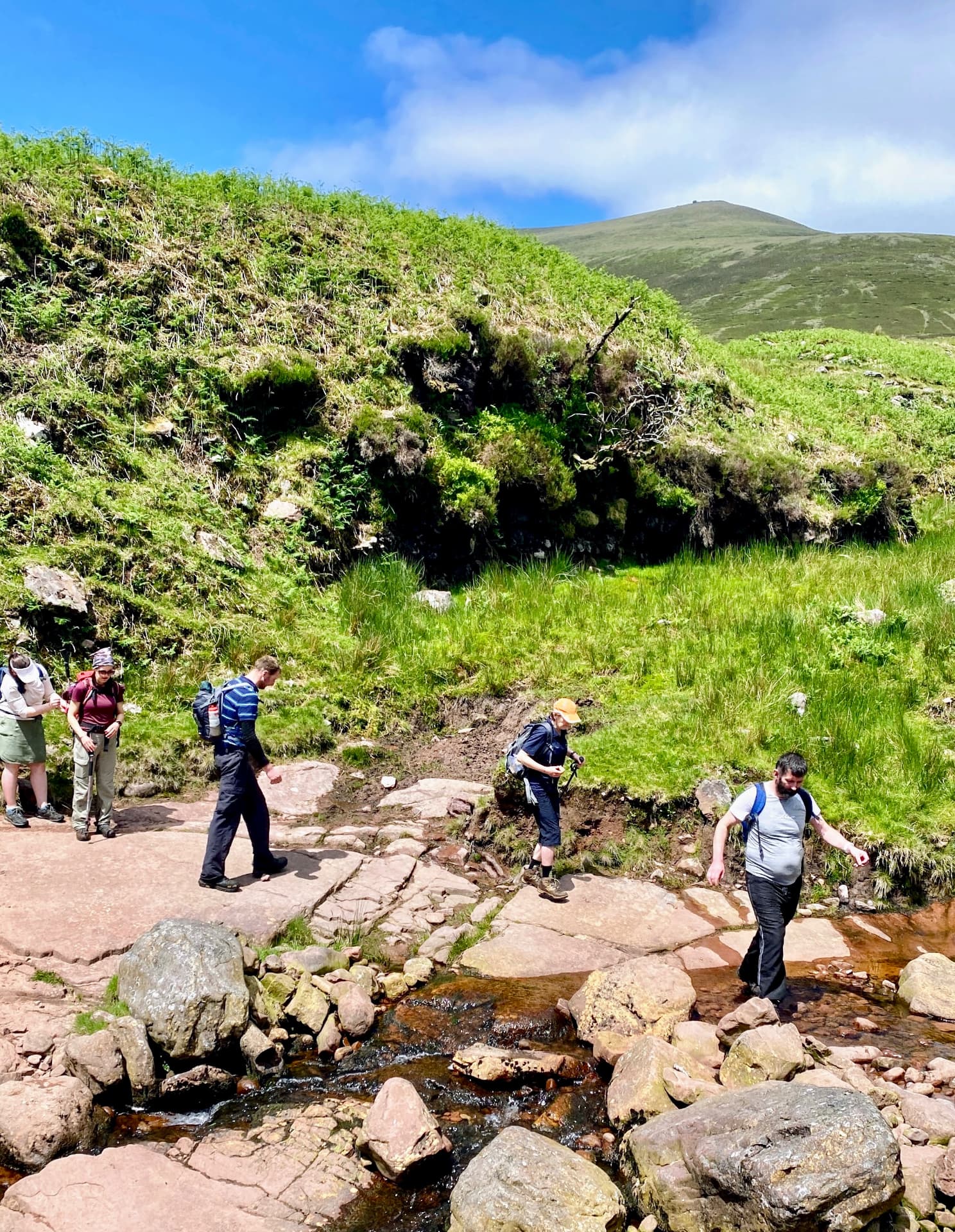
Guided hikes and Mountain Skills courses take place in working upland landscapes as well as natural mountain environments.
Part of spending time in the mountains is learning how to move through them responsibly — following Leave No Trace principles, avoiding unnecessary damage, respecting wildlife, other hill users and landowners, and understanding that the landscape is shaped by both nature and how people use the land.
Mountain days can also open up useful conversations about conservation, farming, habitat management and how upland landscapes might be managed in ways that allow nature to recover while continuing to support the communities that depend on them.
Mountain Skills training includes responsible hillwalking as part of becoming a more capable and independent mountain user. Navigation is important, but so is learning how to make sensible decisions about routes, conditions and your impact on the ground you are travelling through.
Practical choices behind the business
Solar power
Electric-bike charging is done using solar-generated electricity. The home office also uses solar-generated electricity.
Travelling locally
Where practical, guides can travel to Cork activities by bike or electric bike rather than by car.
Supporting local shops
For outdoor clothing and equipment, the preference is to buy locally where practical. Hiking customers are also encouraged to support independent outdoor shops in their own towns and cities, and suitable shops in different parts of Ireland can be recommended when useful.
Growing some of our own food
At home, vegetables and herbs are grown, including potatoes, onions, tomatoes and a range of herbs.
A practical approach, not a claim of perfection
Outdoor tourism still has an environmental impact. People travel to take part, equipment has to be manufactured and maintained, and no small business operates without using resources.
The aim is not to pretend otherwise. It is to make sensible choices where we can, keep learning, and run experiences in a way that respects Cork, the mountains and the communities we pass through.
Experience Cork and the mountains for yourself
Choose from guided cycle tours, mountain hikes, Mountain Skills training and outdoor team activities.